
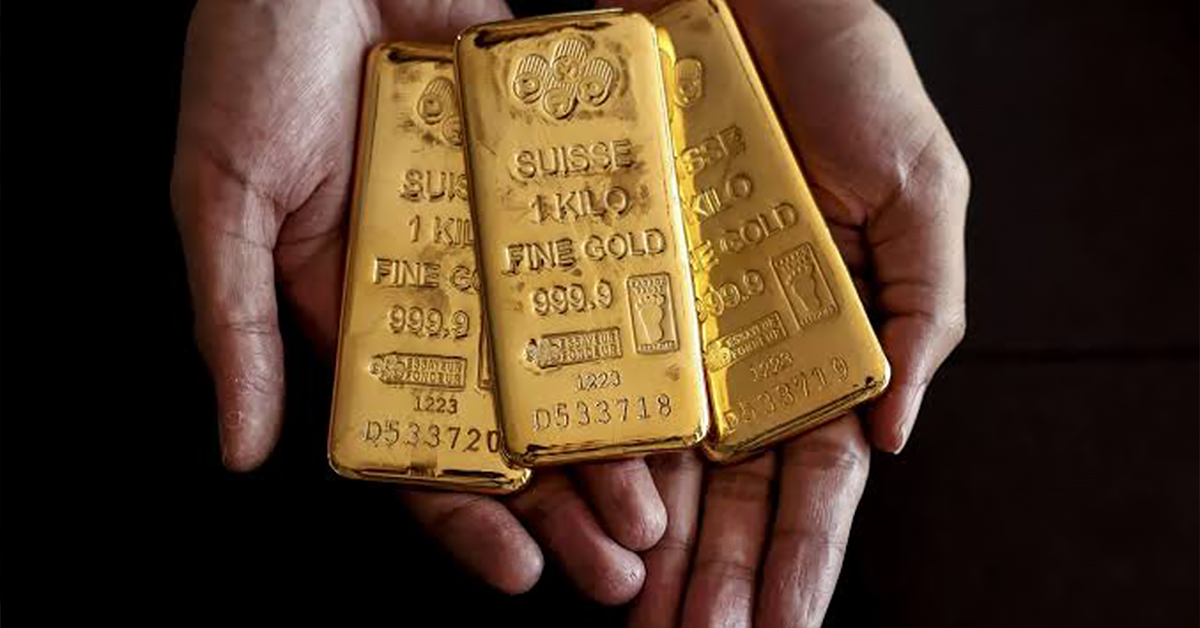
Thailand is one of Southeast Asia’s most established gold markets, with Bangkok serving as the country’s principal center for gold trading, jewelry manufacturing, bullion dealing, and precious-metal commerce. The Thai gold market is particularly notable for its established pricing conventions and the widespread availability of high-purity gold products. For buyers interested in sourcing gold from Thailand, understanding the country’s gold standards, market structure, pricing system, supplier verification procedures, and international trade requirements is essential.
One important point for international buyers is that Thai gold is commonly traded at 96.5% purity, which is approximately 23.16 karat rather than exactly 23 karat. The Gold Traders Association of Thailand publishes market prices specifically for 96.5% gold bars and 96.5% gold jewelry, demonstrating how significant this purity standard is within the Thai market.
This distinction matters when a buyer requests 23 Karat or 97.3% purity gold. A supplier should not simply assume that 96.5% Thai gold and 97.3% gold are interchangeable. The exact purity, weight, form of gold, assay standard, and contractual specification should be agreed upon before a transaction is completed.
For investors, wholesalers, jewelry manufacturers, gold dealers, and international buyers, Thailand can offer access to a sophisticated precious-metals marketplace. However, successful sourcing depends on more than finding an attractive price. Supplier due diligence, independent verification, accurate documentation, secure payment arrangements, and compliance with both Thai export requirements and the destination country’s import regulations are all critical.
Why Thailand Is An Important Gold Trading Market
Thailand has a deeply established gold culture, and gold plays an important role in both consumer wealth preservation and the country’s jewelry industry. Bangkok, particularly the Yaowarat area, is widely associated with gold trading and has a dense concentration of established gold businesses.
The Thai market is also distinctive because its domestic gold trade commonly uses a standardized 96.5% purity for gold bars and jewelry. The Gold Traders Association publishes official daily reference prices for these products, with separate buying and selling prices. This provides market participants with a transparent reference point when evaluating quotations from individual dealers.
For international buyers, this established pricing culture can make Thailand an interesting sourcing market. Nevertheless, the local reference price should not automatically be treated as the final export price. International transactions can involve additional costs relating to product form, fabrication, assay, packaging, insurance, transportation, taxes, customs procedures, financing, and supplier margins.
Understanding 23 Karat And 97.3% Purity Gold
What Does 23 Karat Gold Mean?
The karat system measures the proportion of pure gold in an alloy. Pure gold is conventionally represented as 24 karat, while lower-karat gold contains other metals that provide additional strength and alter the physical characteristics of the material.
A product described as 23 karat is therefore expected to contain approximately 23 parts pure gold out of 24. Mathematically, that corresponds to approximately 95.83% gold, although actual commercial specifications can differ depending on the market and the terminology being used.
This is why buyers should focus on the stated fineness or assay result, rather than relying exclusively on the term “23K.”
Is Thai 96.5% Gold The Same As 23 Karat?
Thai gold commonly traded at 96.5% purity is often described informally as 23K or “23 karat gold,” but 96.5% purity is actually higher than the mathematical 23K equivalent of 95.83%.
The distinction becomes especially important in international commercial transactions. If a buyer specifically requires 97.3% purity, purchasing a standard Thai 96.5% product would not satisfy that specification unless the parties explicitly agree to a different purity requirement.
The safest approach is to specify the required fineness numerically in the purchase agreement and verify it through an assay or recognized testing process.
Where To Buy Gold In Thailand
Bangkok And The Yaowarat Gold District
Bangkok is the most prominent location for gold trading in Thailand. Yaowarat, commonly known as Bangkok’s Chinatown, has a particularly strong association with gold businesses and precious-metal trading.
The concentration of gold businesses in this area gives buyers an opportunity to compare products, premiums, services, and trading terms. However, physical proximity to other gold shops should not be treated as proof that every business is suitable for a large commercial transaction. Supplier verification remains necessary.
Established Gold Dealers And Bullion Businesses
Thailand has numerous established gold dealers serving retail customers, investors, jewelers, and commercial buyers. Some businesses specialize in gold jewelry, while others focus more heavily on bullion and investment products.
For larger purchases, buyers should distinguish between a retail jewelry transaction and a wholesale or export transaction. The documentation, pricing structure, settlement process, and logistics requirements can be substantially different.
How To Choose A Reliable Gold Supplier In Thailand
Verify The Company’s Identity
Before making a substantial payment, establish exactly who you are dealing with. Obtain the company’s legal name, registered address, contact details, registration information, and relevant business documentation.
A legitimate supplier should be able to provide consistent information across its invoices, contracts, bank details, website, and official business records.
Examine The Supplier’s Trading History
A supplier’s history can provide useful information about its experience and operational credibility. Buyers should investigate how long the company has operated, what type of gold it normally trades, whether it handles international customers, and whether it can provide appropriate commercial documentation.
A company that regularly handles export transactions may be better equipped to manage the additional requirements associated with international gold shipments.
Verify Banking Information
Payment instructions should be treated carefully, particularly for large-value transactions. Bank account details should correspond with the legal entity named in the contract and invoice.
If a supplier suddenly requests payment to a different account, the buyer should independently verify the change through an established communication channel before transferring funds.
How To Verify Gold Purity Before Buying
Request A Certificate Or Assay Report
For a significant transaction, buyers should request documentation establishing the gold’s purity. Depending on the transaction and product, this may include an assay certificate, certificate of analysis, hallmark documentation, refinery documentation, or independent laboratory testing.
The documentation should clearly identify the product and its corresponding purity rather than simply making a general statement about the supplier’s gold.
Conduct Independent Testing
For larger transactions, independent testing can provide an additional layer of protection. The buyer and seller can agree in advance on the testing organization, testing method, sampling procedure, and acceptance threshold.
This is particularly important when the contractual requirement is 97.3% purity, because the buyer should not rely solely on a verbal statement that the product is “23K.”
Confirm Weight And Purity Separately
Gold value depends on both weight and purity. A transaction should therefore establish the gross weight, net gold weight where applicable, and fineness or assay result.
For commercial quantities, even a small discrepancy in either weight or purity can produce a meaningful difference in the value of the shipment.
Understanding Gold Prices In Thailand
Thai Gold Prices Are Published Regularly
The Gold Traders Association publishes reference prices for Thai gold products. Its published market data distinguishes between gold bars and gold jewelry and commonly references 96.5% purity for both categories.
This is useful for buyers because it provides a benchmark against which dealer quotations can be evaluated.
However, a published domestic price should not automatically be interpreted as the price an international buyer will pay for an export transaction.
Gold Prices Change With The International Market
Gold is a globally traded commodity, and its value changes in response to international market conditions. Interest-rate expectations, inflation, currency movements, geopolitical uncertainty, investor demand, central-bank activity, and broader financial-market conditions can all influence gold prices.
Consequently, a quotation received from a Thai supplier should be evaluated against the relevant international gold price at the time of the transaction.
Understand The Difference Between Spot Price And Supplier Price
The international spot price represents a market reference for gold, while a supplier’s quotation can include additional components.
Depending on the transaction, these may include fabrication costs, dealer premiums, assay charges, packaging, logistics, insurance, taxes, financing costs, and other agreed expenses.
A buyer should therefore request a clear quotation showing how the final price has been calculated.
Buying Gold Bars Versus Gold Jewelry
Gold Bars For Investment And Trading
Gold bars are generally easier to evaluate as a commodity because their value can be assessed primarily through weight and fineness.
For commercial buyers, bars can also provide clearer documentation regarding specifications and serial identification where applicable.
However, the preferred bar size, refinery, assay documentation, and resale market should be considered before purchasing.
Gold Jewelry
Thai gold jewelry is particularly well known for its high gold content and distinctive craftsmanship. However, jewelry prices can include manufacturing charges and design premiums in addition to the underlying value of the gold.
For a buyer whose objective is primarily bullion investment or international resale, these additional costs should be carefully evaluated.
Important Considerations For International Gold Buyers
Confirm The Exact Product Specification
Before placing an order, the buyer and supplier should agree on the exact product specification. This should include the form of gold, purity, weight, quantity, acceptable assay tolerance, markings, packaging, and any other relevant characteristics.
If the buyer requires 97.3% purity, that figure should appear explicitly in the transaction documentation.
Establish The Delivery Terms
International gold transactions should clearly identify who is responsible for transportation, insurance, export clearance, import clearance, and other logistics responsibilities.
Where Incoterms are used, the applicable Incoterm should be clearly identified together with the named place or destination.
Check Import Requirements Before Purchasing
The buyer should establish the legal requirements of the destination country before entering into a purchase agreement. Precious-metal imports can be subject to customs declarations, licensing, documentation, taxation, anti-money-laundering controls, and other regulatory requirements.
The supplier’s ability to export gold from Thailand does not automatically mean that the buyer can import it into another country without additional requirements.
Documentation Required For An International Gold Purchase
Commercial Invoice
The commercial invoice should accurately describe the gold being purchased, including its quantity, weight, purity, value, buyer, seller, and transaction terms.
Accuracy is particularly important because customs authorities may use the invoice when assessing the shipment.
Certificate Of Purity Or Assay
The purity documentation should correspond to the actual shipment. If the agreed specification is 97.3%, the documentation should provide evidence supporting that specification.
Packing And Shipping Documentation
International shipments generally require appropriate transportation and customs documentation. The exact documents depend on the origin, destination, shipping method, product, and applicable regulations.
Buyers should establish the complete documentation package before the shipment is dispatched.
Secure Payment Practices When Buying Gold From Thailand
Use Traceable Payment Methods
Large commercial gold transactions should use traceable financial channels that provide appropriate records of payment.
Bank transfers between verified corporate accounts are generally preferable to informal payment arrangements, subject to the requirements of the transaction and applicable laws.
Avoid Pressure To Pay Immediately
Buyers should be cautious when a supplier creates unusual urgency or pressures them to make immediate payments before documentation and verification are complete.
A legitimate commercial transaction should allow sufficient time for reasonable due diligence.
Match The Contract, Invoice And Bank Account
The legal name on the purchase agreement, commercial invoice, and payment account should be carefully checked for consistency.
Any unexplained discrepancy should be resolved before funds are transferred.
Shipping Gold From Thailand To International Destinations
Work With Experienced Precious-Metal Logistics Providers
Gold is a high-value commodity, and its transportation requires appropriate security and documentation. International buyers should use logistics providers with relevant experience in precious-metal shipments.
The transportation arrangement should account for secure handling, customs procedures, insurance, and chain-of-custody requirements.
Obtain Appropriate Insurance
Insurance can protect the parties against specified risks during transportation. The coverage should be reviewed carefully to establish the insured value, covered risks, exclusions, and period of coverage.
For high-value shipments, insurance arrangements should be confirmed before the gold leaves the supplier’s premises.
Common Mistakes When Buying Gold From Thailand
Assuming All Thai Gold Is 97.3% Pure
This is one of the most important mistakes to avoid. Thailand’s domestic market prominently uses 96.5% purity, so buyers seeking 97.3% gold must specify and verify the exact purity required.
Comparing Quotations Without Comparing Specifications
Two suppliers may quote different prices because they are offering different purities, weights, products, or services.
A meaningful price comparison requires identical specifications.
Buying From An Unverified Supplier
A professional-looking website or social-media profile is not sufficient evidence of legitimacy. Buyers should verify the legal entity, physical presence, business records, banking details, and transaction documentation.
Ignoring The Destination Country’s Regulations
A gold purchase involves both the exporting jurisdiction and the importing jurisdiction. Buyers should understand their own country’s requirements before committing to the transaction.
Why Buy Gold From Thailand?
Access To An Established Gold Market
Thailand has a sophisticated domestic gold market with established pricing practices and a broad network of gold businesses.
The Gold Traders Association’s published market prices provide an additional reference point for buyers assessing domestic gold quotations.
Strong Gold Manufacturing And Jewelry Industry
Thailand’s established jewelry sector provides access to experienced goldsmiths, manufacturers, wholesalers, and gold dealers. This makes the country particularly relevant for buyers seeking both bullion and finished gold products.
Competitive Market Environment
A developed gold market gives buyers the ability to compare suppliers and products rather than relying on a single source.
For commercial buyers, this can create opportunities to negotiate terms based on quantity, product specifications, delivery requirements, and long-term business relationships.
Frequently Asked Questions About Buying Gold From Thailand
- Is Thailand A Good Place To Buy Gold? Thailand has a well-established gold market, particularly in Bangkok, and is widely known for its high-purity gold products and active gold-trading industry. Buyers should nevertheless conduct appropriate supplier and product due diligence before purchasing.
- What Purity Is Thai Gold Usually? The Thai domestic market commonly uses 96.5% purity for gold bars and jewelry. The Gold Traders Association publishes reference prices specifically for 96.5% gold.
- Is 96.5% Gold The Same As 97.3% Gold? No. Both are high-purity gold, but they have different fineness levels. A buyer requiring 97.3% purity should have that specification independently verified rather than assuming that standard 96.5% Thai gold meets the requirement.
- Where Is Gold Commonly Traded In Bangkok? Yaowarat and Bangkok’s Chinatown are particularly well known for gold businesses. However, buyers should evaluate individual suppliers based on their credentials and transaction capabilities rather than location alone.
- Can I Buy Gold From Thailand For International Export? International gold transactions are possible, but the specific export and import requirements depend on the transaction, destination country, product, and applicable regulations. Buyers should establish these requirements before purchasing.
- How Do I Know If A Thai Gold Supplier Is Legitimate? Verify the company’s legal identity, registration information, physical address, business history, banking details, product documentation, and ability to provide appropriate commercial records. For substantial transactions, independent due diligence and product testing are strongly advisable.
Conclusion
Buying gold from Thailand can provide international buyers with access to one of Southeast Asia’s most established precious-metal markets. Bangkok’s long-standing gold-trading ecosystem, experienced dealers, established pricing mechanisms, and strong jewelry industry make Thailand an important sourcing destination for gold buyers.
For buyers specifically seeking 23 Karat or 97.3% purity gold, however, understanding Thailand’s local purity convention is essential. The Thai market commonly trades 96.5% gold, so 97.3% should be treated as a separate specification and verified accordingly.
The safest approach is to begin with a clearly defined product specification, verify the supplier, confirm the gold’s purity and weight through reliable documentation or independent testing, establish transparent contractual terms, and understand all export and import requirements before payment and shipment.
For international buyers, the objective should not simply be to find the cheapest gold in Thailand. The better objective is to establish a verifiable, properly documented, compliant, and commercially secure gold transaction with a supplier capable of delivering exactly what has been agreed.
Leave a Reply