
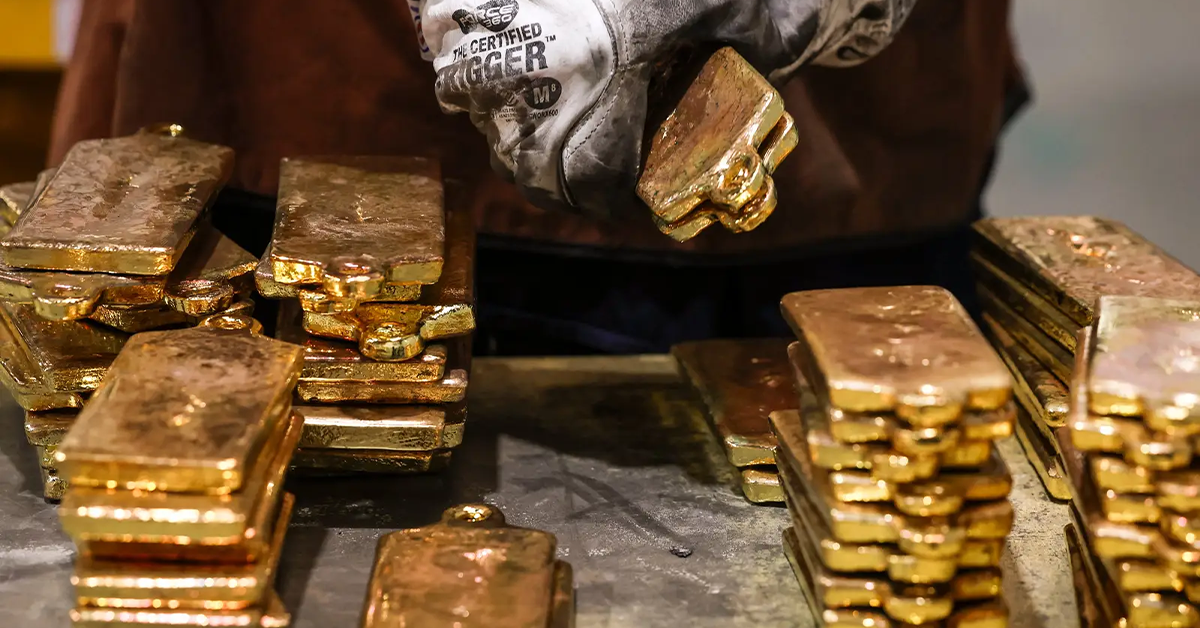
Suez is an important commercial and logistics center in Egypt, strategically positioned at the northern end of the Gulf of Suez and closely connected to the Suez Canal and its surrounding economic and industrial zones. This location gives the city particular importance for businesses involved in international trade, transportation, logistics, and commodities. For buyers interested in sourcing 23 Karat (97.3%) gold from Egypt, Suez can be an important location to consider, particularly where secure logistics, international shipping, and access to established commercial infrastructure are part of the transaction.
Buying gold from Suez requires more than simply identifying a seller and agreeing on a price. Gold is a high-value commodity, and a successful transaction depends on verifying the supplier, confirming the exact purity and weight, understanding the pricing structure, reviewing documentation, and ensuring that the transaction complies with Egyptian and destination-country requirements. Egypt maintains formal legal and regulatory frameworks governing precious-metal dealings, while import and export procedures are supported through government trade and customs systems.
For international buyers, the combination of Suez’s strategic location and Egypt’s established commercial infrastructure can make the city relevant to gold sourcing and international trade. However, buyers should distinguish between gold that is physically available in Suez, gold sourced elsewhere in Egypt and transported through Suez, and gold that is merely being offered by a company based in the region. Establishing the actual source, ownership, custody, and documentation of the gold is an essential part of responsible due diligence.
Why Buy Gold From Suez?
Suez occupies a unique position within Egypt’s commercial geography. Its proximity to the Suez Canal gives it exceptional importance in global maritime transportation, while the wider Suez Canal Economic Zone provides infrastructure for industrial, logistics, and trading activities. The economic zone maintains formal procedures covering customs transactions, imports, exports, warehousing, and logistics operations.
This infrastructure can be particularly valuable when a gold transaction involves international transportation. Rather than treating the location simply as a place where gold is purchased, international buyers should consider Suez as part of a broader supply chain that may include sourcing, verification, secure custody, documentation, customs processing, insurance, and transportation.
Egypt is also strengthening its position within the regional gold ecosystem. In December 2025, the Central Bank of Egypt and Afreximbank announced a memorandum of understanding concerning the establishment of a pan-African Gold Bank programme, with objectives including formalizing gold value chains and strengthening gold-related trade and value addition.
Understanding 23 Karat (97.3%) Gold
What Does 23 Karat Gold Mean?
23 Karat gold refers to gold with a very high level of purity. A product described as 23K or 97.3% gold contains approximately 97.3% gold by weight, with the remaining portion consisting of other metals used to provide greater physical strength and durability.
For commercial buyers, the distinction between stated purity and independently verified purity is extremely important. A seller’s description should never be treated as the final proof of gold content. Before a significant transaction is completed, buyers should request appropriate documentation and, where practical, arrange independent testing or an assay.
Why Buyers Choose 23K Gold
23K gold offers a combination of high gold content and greater physical durability than very high-purity gold. This makes it potentially suitable for jewelry manufacturing, bullion-related transactions, investment purposes, and other applications where high gold content is important.
For international transactions, however, buyers should focus on the actual assay result, rather than relying solely on a karat description. The agreed commercial specification should clearly state the required purity, acceptable tolerance, weight, form of the gold, and testing procedure.
How To Find A Reliable Gold Supplier In Suez
Verify The Company’s Identity
Before discussing payment or shipment, establish exactly who is selling the gold. Request the company’s registered legal name, physical business address, registration details, contact information, authorized representative, and relevant licenses or permits.
A professional supplier should be able to explain its role in the transaction and provide documentation appropriate to the nature of its business. Buyers should be cautious when a supposed supplier refuses to provide basic corporate information or continually changes the identity of the contracting party.
Confirm Ownership And Right To Sell
A company offering gold for sale should be able to demonstrate that it has the legal right to sell the specific gold being offered. This is particularly important when an intermediary, broker, agent, or trading company is involved.
The buyer should establish the chain of ownership or authority sufficiently to understand who owns the gold, who is authorized to sell it, and which entity will appear on the commercial documentation.
Conduct Independent Due Diligence
Do not rely exclusively on documents supplied by the seller. Where the transaction is substantial, independently verify the company’s registration, business history, physical presence, banking information, and relevant regulatory status.
Egypt’s Financial Regulatory Authority has specifically warned that its framework for gold investment funds should not be confused with a general license for companies conducting direct precious-metal sales to the public. It advises buyers to exercise due diligence and warns against companies falsely claiming FRA endorsement for direct gold trading.
How To Verify 23 Karat Gold Purity
Request An Assay Certificate
An assay certificate provides evidence of the tested composition of the gold. For a transaction involving 23K gold, the buyer should ensure that the assay documentation clearly identifies the material tested and provides the resulting purity.
Where the value of the transaction justifies it, an independent assay can provide an additional layer of protection by separating the quality verification process from the seller.
Verify The Weight
Gold should be weighed using appropriate, calibrated equipment, with the measurement recorded in the transaction documents. The buyer should confirm whether the stated weight refers to gross weight, net weight, or fine-gold content.
This distinction becomes increasingly important as transaction volumes increase because even a small difference in weight or purity can materially affect the value of a shipment.
Match The Assay To The Shipment
The assay report should correspond to the actual gold being purchased. Buyers should avoid situations where an assay certificate is presented without a clear connection to the bars, lots, or material being sold.
Serial numbers, lot numbers, photographs, packaging records, or other appropriate identification methods can help establish traceability.
Understanding Gold Prices In Suez
International Gold Prices
The underlying value of gold is influenced by international bullion markets. Prices can change throughout the trading day as a result of investor demand, interest-rate expectations, inflation concerns, currency movements, geopolitical developments, central-bank activity, and broader market conditions.
Consequently, a supplier’s quotation should clearly state whether the price is fixed or linked to an agreed market benchmark.
Purity And Fine-Gold Content
Two gold products with identical gross weights can have different values if their purity levels differ. A buyer purchasing 23K gold should therefore consider both the gross weight and the fine-gold content when comparing offers.
This prevents buyers from comparing quotations solely on price per kilogram without accounting for differences in purity.
Premiums And Additional Costs
The final purchase price may include costs beyond the underlying gold value. Depending on the transaction, these can include refining or fabrication premiums, assay charges, secure storage, transportation, insurance, customs-related costs, banking charges, and other agreed expenses.
A professional quotation should identify these costs clearly instead of presenting an apparently low gold price and adding unexplained charges later.
Documentation For Buying Gold From Egypt
Commercial Invoice
A commercial invoice should identify the contracting parties, describe the gold, state the quantity and purity, specify the price, and identify the agreed payment and delivery terms.
For international transactions, accurate commercial documentation is essential because the information contained in the documents may be reviewed by customs and other authorities.
Certificate Of Purity And Assay
The purity certificate or assay report should correspond to the actual shipment and clearly establish the quality of the gold.
For large transactions, buyers may wish to make independent testing a condition of final payment or acceptance.
Export And Customs Documentation
International gold shipments may be subject to specific export, customs, and regulatory requirements. Egypt maintains official systems and published regulations governing import and export procedures, while the Suez Canal Economic Zone provides information concerning customs and export processes within its jurisdiction.
The precise documentation required depends on the nature of the transaction, the form and origin of the gold, the parties involved, and the destination country. Buyers should therefore confirm the requirements with the relevant Egyptian authorities and their own country’s customs and regulatory authorities before shipment.
Secure Payment For Gold Transactions
Use Verifiable Banking Channels
Because gold transactions involve substantial financial values, payment arrangements should be structured carefully. Buyers should use traceable banking channels and ensure that the beneficiary account belongs to the verified contracting entity.
Any last-minute request to redirect payment to a different company, individual, or bank account should be independently verified before funds are released.
Use A Written Sales Agreement
A written agreement should establish the commercial terms before payment is made. The agreement should identify the seller and buyer, specify the gold’s purity and quantity, establish the price mechanism, define inspection and assay procedures, establish payment milestones, and clarify delivery and shipping responsibilities.
A properly drafted agreement also provides a mechanism for dealing with discrepancies in weight, purity, delivery, documentation, or other contractual requirements.
Shipping Gold From Suez To International Buyers
Work With Specialized Logistics Providers
Gold should not be treated like ordinary commercial cargo. International shipments require appropriate security, packaging, documentation, insurance, and transportation arrangements.
A specialized precious-metals logistics provider can help coordinate the physical movement of the shipment while reducing operational risks.
Understand Customs Requirements
International buyers must comply with the import regulations of the destination country. These requirements may include customs declarations, import documentation, proof of origin, valuation documents, assay certificates, and other regulatory information.
Egypt’s Customs Law No. 207 of 2020 is currently listed by Egypt’s Ministry of Investment and Foreign Trade as active legislation, with implementing regulations issued under Ministerial Finance Decision No. 430 of 2021.
Arrange Appropriate Insurance
Insurance should be considered for the full period during which the buyer carries the risk of loss or damage. The contract should clearly state when risk transfers from the seller to the buyer and which party is responsible for insurance.
These details become especially important when transactions are structured under international delivery terms such as CIF, where the allocation of responsibilities should be expressly defined in the contract.
Why Due Diligence Matters When Buying Gold From Suez
Gold scams frequently exploit the high value of precious metals and the desire of buyers to obtain unusually attractive prices. A legitimate transaction should withstand reasonable scrutiny.
Buyers should therefore be cautious of suppliers offering gold substantially below prevailing market levels, sellers demanding unexplained advance fees, transactions based solely on messaging applications, unverifiable assay certificates, unclear ownership, pressure to make immediate payments, or requests to bypass normal customs and regulatory procedures.
A genuine commercial opportunity should be capable of being documented, independently verified, and structured through recognized financial and logistics channels.
Common Mistakes To Avoid
Choosing A Supplier Only Because Of Price
The cheapest quotation is not necessarily the most economical transaction. A low price accompanied by poor documentation, questionable purity, unclear ownership, or excessive additional charges can ultimately cost the buyer significantly more.
Price should therefore be evaluated alongside purity, fine-gold content, documentation, supplier credibility, logistics, insurance, and payment security.
Paying Before Verification
Buyers should avoid releasing substantial funds before verifying the supplier, the contractual terms, the gold specifications, and the required documentation.
Where appropriate, transactions can be structured around inspection, assay, escrow arrangements, documentary conditions, or staged payments.
Assuming A License Means Everything Is Verified
A business license or registration document demonstrates that an entity exists or is authorized to conduct a particular activity, but it does not automatically prove that every gold shipment offered by that entity is genuine or available.
Supplier verification and shipment-level verification remain separate responsibilities.
Benefits Of Buying Gold From Suez
Strategic International Location
Suez’s proximity to the Suez Canal gives it exceptional significance in international transportation and logistics. This can be advantageous when a transaction requires efficient movement of high-value cargo through international supply chains.
Access To Commercial And Logistics Infrastructure
The wider Suez Canal Economic Zone provides infrastructure and procedures supporting international trade, customs processing, logistics, warehousing, and related commercial activities.
Connection To Egypt’s Wider Gold Market
Suez should not be viewed in isolation from Egypt’s broader precious-metals ecosystem. Buyers can potentially source through Egyptian suppliers while using Suez’s strategic logistics position as part of the transaction structure.
Frequently Asked Questions About Buying Gold From Suez
- Is Suez A Good Place To Buy Gold? Suez can be an important location for international gold transactions because of its strategic position, commercial infrastructure, and connection to the Suez Canal. However, buyers should evaluate individual suppliers and specific gold shipments rather than assuming that every seller operating in Suez is legitimate.
- Can I Buy 23 Karat Gold From Suez? Buyers may be able to source high-purity gold through suppliers operating in or connected to Suez. The exact availability, form, quantity, and purity should be confirmed directly with the supplier and independently verified through appropriate assay documentation.
- How Do I Know If 23K Gold Is Really 97.3% Pure? The most reliable approach is to obtain an appropriate assay or laboratory test confirming the composition of the actual gold being purchased. The assay should be traceable to the specific bars, lots, or shipment being sold.
- Can Gold Purchased In Suez Be Exported? International export depends on the specific transaction, applicable Egyptian laws and procedures, the nature and origin of the gold, and the destination country’s import requirements. Buyers should confirm the applicable requirements before entering into a binding transaction.
- Should I Pay For Gold Before Seeing The Documentation? Buyers should exercise caution before making substantial payments. Supplier credentials, ownership, purity, contractual terms, and required documentation should be independently verified before funds are released.
- Does The Financial Regulatory Authority License Every Gold Seller In Egypt? No. Egypt’s Financial Regulatory Authority has explicitly clarified that its gold-related framework concerning investment funds should not be interpreted as a general license for direct precious-metal trading with the public.
Conclusion
Buying 23 Karat (97.3%) gold from Suez can provide international buyers with access to Egypt’s precious-metals market while benefiting from one of the country’s most strategically important logistics locations. Suez’s relationship with the Suez Canal, its commercial infrastructure, and its connection to international transportation make it an important location to consider when evaluating gold supply opportunities.
However, the location of a supplier should never replace proper due diligence. Buyers should verify the identity and authority of the seller, establish ownership of the gold, independently confirm purity and weight, review commercial and export documentation, use secure payment channels, arrange appropriate insurance, and comply with both Egyptian and destination-country regulations.
The strongest gold transactions are built around verified purity, transparent pricing, documented ownership, secure payment, compliant export procedures, and professional logistics. By applying these principles, buyers can approach gold sourcing from Suez with a much clearer understanding of both the opportunities and the responsibilities involved.
Important: Gold trading and international precious-metal transactions are subject to applicable laws and regulations that can change. Buyers should obtain current advice from the relevant Egyptian authorities, customs authorities, licensed professionals, and authorities in the destination country before completing a transaction.
Leave a Reply