
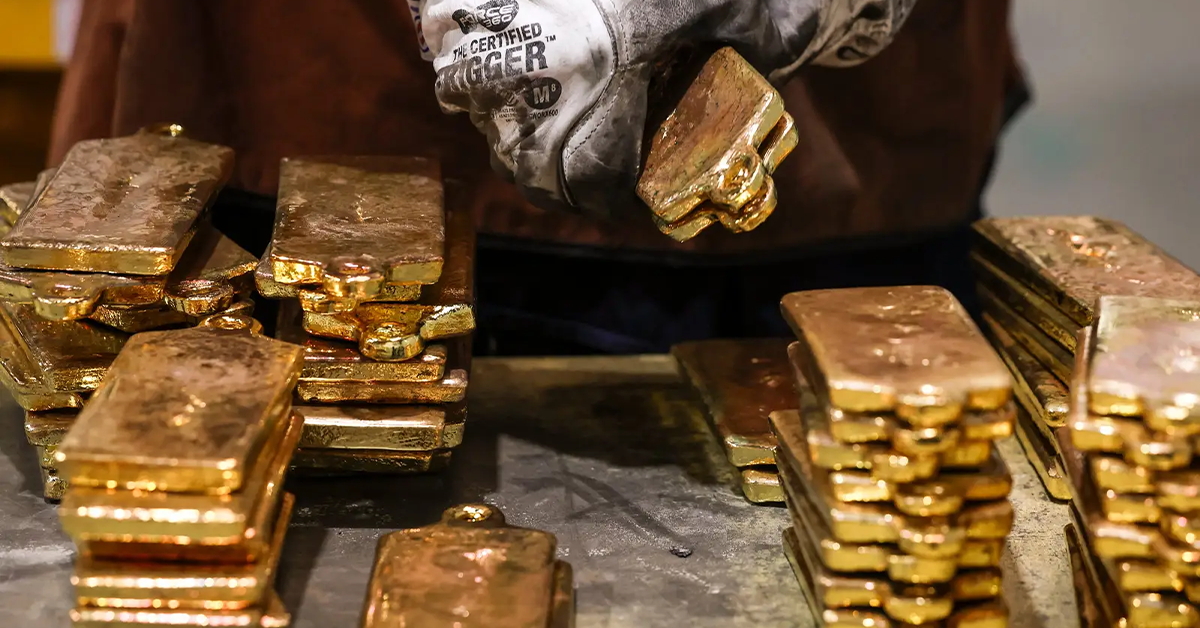
Giza is one of Egypt’s important centers for gold and precious metals, offering access to established jewelry businesses, bullion products, wholesalers, refiners, and other participants in the country’s gold market. For buyers looking to source gold from Egypt, Giza provides access to both traditional jewelry markets and modern bullion businesses serving retail, wholesale, and corporate customers.
The gold market in Giza is closely connected to the wider Cairo metropolitan market, giving buyers access to a broad network of suppliers and precious-metals businesses. Current market offerings in Giza include investment bars, coins, jewelry, and other gold products in different weights and purities. For example, established bullion businesses currently offer products through locations and services specifically covering Cairo and Giza, while some Giza-based retailers offer 18K, 21K, and 24K products.
For an international buyer, however, buying gold from Giza should involve more than simply finding a supplier with an attractive price. The buyer should establish the exact gold specification, verify purity and weight, conduct supplier due diligence, understand the transaction structure, and confirm the applicable export, import, customs, and transportation requirements before funds or gold change hands.
Why Buy Gold From Giza?
Giza benefits from its proximity to Cairo, one of Egypt’s principal commercial centers, while also having its own network of gold retailers, jewelry businesses, bullion suppliers, and precious-metal service providers. This gives buyers a relatively broad marketplace in which to compare products, specifications, premiums, and supplier capabilities.
The market also accommodates different types of gold buyers. Retail customers may be interested in jewelry or small investment bars, while commercial buyers can look for wholesale quantities, bullion products, or larger transactions. Some established Egyptian bullion companies explicitly provide wholesale and corporate services and operate sales channels serving Cairo and Giza.
For international buyers, this combination of supplier diversity and access to Egypt’s broader precious-metals infrastructure can make Giza an interesting sourcing location. Nevertheless, the appropriate supplier depends on the quantity, purity, intended use, delivery destination, and regulatory requirements associated with the transaction.
Understanding Gold Purity Before Buying
Gold purity should always be established before negotiating the final price. The karat system expresses the proportion of gold in a metal alloy, with 24K representing the highest conventional karat designation.
A product described as 23K gold is approximately 95.8% pure gold, not 97.3%. A purity of approximately 97.3% corresponds to about 23.35K on the conventional 24-part karat scale. This distinction is important when preparing a commercial gold transaction because the purity stated in an agreement, quotation, invoice, assay certificate, and physical product should correspond.
Buyers should therefore avoid relying solely on descriptions such as “23K,” “97.3%,” or “high-purity gold.” Instead, the precise specification should be confirmed through an independent assay or recognized certification process.
Egyptian gold suppliers currently advertise a range of purities. For example, established businesses in the Giza market list 21K and 24K products, while other jewelry businesses offer collections in 18K, 21K, and 24K.
How To Find A Reliable Gold Supplier In Giza
Verify The Supplier’s Business Identity
Before discussing price or payment, establish exactly who you are dealing with. A professional supplier should be able to provide its legal business name, physical business location, contact information, relevant registration details, and documentation appropriate to the transaction.
For larger purchases, buyers should perform additional due diligence rather than relying exclusively on a website, social-media account, telephone conversation, or messaging application.
Check The Supplier’s Physical Presence
A physical location can provide an additional layer of confidence, particularly when dealing with significant quantities of precious metals. Several established gold businesses publicly identify locations in Giza, including businesses operating in 6th of October and other parts of Giza Governorate.
However, the existence of a physical address alone should not be treated as proof of legitimacy. The business identity, ownership, documentation, product source, and transaction structure should still be independently verified.
Examine Industry Experience
Experience matters when purchasing gold because precious-metal transactions involve technical specifications, valuation, documentation, testing, logistics, and regulatory considerations.
A supplier with established operations and demonstrable experience in bullion or gold trading may be better positioned to handle commercial requirements than an unknown intermediary offering an unusually attractive quotation.
Verify Gold Purity Before Completing The Purchase
Request An Assay Certificate
An assay certificate provides evidence of the tested composition of the gold. For a significant transaction, buyers should consider independent testing rather than relying exclusively on a certificate supplied by the seller.
The assay should correspond to the specific gold being purchased and should clearly identify the tested material, purity, weight, testing method, and relevant laboratory or assayer.
Confirm The Weight
Gold should be weighed using appropriate calibrated equipment. The measured weight should correspond with the documentation and the quantity specified in the purchase agreement.
For large transactions, buyers should maintain independent records of the weights measured before shipment or settlement.
Verify Product Identification
Where applicable, gold bars should have identifiable markings such as weight, purity, manufacturer or refiner information, and serial numbers. These details can assist with traceability and subsequent verification.
Established Egyptian bullion companies currently market gold bars in numerous weights, including small investment products through larger commercial bars.
Understanding The Price Of Gold In Giza
The price offered by a supplier should not be viewed as a single unexplained number. A professional quotation should make it possible to understand how the final price has been calculated.
International gold prices provide the underlying market reference, while the local currency exchange rate, purity, product form, fabrication or making charges, taxes, dealer premiums, logistics, insurance, and other transaction-specific expenses can affect the final amount payable.
For example, current Egyptian bullion retailers publish separate gold values and additional charges for certain products. El Galla Gold’s published product information illustrates how a gold bar’s gold amount can be presented separately from making charges and VAT.
This is why buyers comparing suppliers should compare the total landed or delivered cost, rather than simply comparing the quoted price per gram.
Buying Gold For International Trade
International buyers require additional considerations beyond those applicable to a domestic purchase. The transaction should clearly establish who is responsible for export formalities, customs procedures, insurance, transportation, documentation, and delivery.
The purchase agreement should specify the gold’s exact purity, weight, form, price methodology, delivery terms, inspection rights, payment arrangements, and responsibilities of each party.
If the gold is being exported from Egypt to another country, both the Egyptian export requirements and the destination country’s import requirements need to be considered. The buyer should not assume that a transaction that is legal or straightforward domestically will automatically satisfy the regulations of the destination country.
Documentation To Request When Buying Gold From Giza
Commercial Invoice
The commercial invoice should clearly identify the seller and buyer and describe the gold being purchased. It should include the quantity, weight, purity, unit price, total value, currency, and applicable transaction terms.
For international shipments, accurate commercial documentation is particularly important because customs authorities may use it when assessing the shipment.
Certificate Of Purity
The purity certificate or assay documentation should correspond to the actual gold being sold. For high-value transactions, independent verification can provide an additional level of protection.
Proof Of Origin
Where required, buyers should establish the lawful origin and provenance of the gold. This is especially important for international transactions because precious metals are subject to heightened due-diligence and anti-money-laundering considerations in many jurisdictions.
Export And Shipping Documentation
Where gold is being exported, the required export and transportation documentation should be prepared in accordance with applicable laws and the agreed delivery terms.
Safe Payment Practices When Buying Gold From Giza
Use Traceable Payment Methods
For significant transactions, payment should generally be made through traceable and properly documented financial channels. Buyers should be cautious about requests for payment to unrelated individuals, unexplained third-party accounts, or last-minute changes to banking instructions.
Any change to payment instructions should be independently verified using previously established contact information.
Use A Written Gold Purchase Agreement
A properly drafted purchase agreement should establish exactly what is being purchased and how the transaction will be completed.
The agreement should address purity, weight, price, assay procedures, payment milestones, delivery, insurance, documentation, inspection rights, and procedures for handling discrepancies.
For international transactions, the agreement should also clearly identify the applicable delivery terms and the responsibilities of each party.
Shipping Gold From Giza To Another Country
Precious metals require specialized handling when transported internationally. Buyers should work with logistics providers that have appropriate experience with high-value precious-metal shipments and understand the relevant customs and security requirements.
Insurance should also be considered carefully. The coverage should correspond to the value and risk profile of the shipment and should remain valid for the relevant stages of transportation.
For institutional transactions, physical-gold services may include independent assay, insured storage, and secure delivery arrangements. Such services illustrate the importance of treating physical gold logistics as a specialized process rather than an ordinary parcel shipment.
Common Mistakes To Avoid When Buying Gold From Giza
Choosing The Cheapest Offer
An unusually low price deserves additional scrutiny. Gold is a globally traded commodity, so a quotation significantly below the expected market value should prompt questions about purity, weight, origin, documentation, payment conditions, or other hidden costs.
The objective should be to identify the best verified transaction, not simply the lowest advertised price.
Paying Before Verification
Buyers should avoid rushing into payment before verifying the supplier, product specifications, documentation, and transaction terms.
For larger purchases, independent verification before releasing substantial funds can significantly reduce avoidable risks.
Confusing Karat With Percentage Purity
This is particularly important when purchasing 23K or approximately 97.3% gold. As noted above, 23K corresponds to approximately 95.8% purity, while 97.3% is a higher purity level. The commercial contract should therefore state the exact percentage purity required rather than relying solely on a karat description.
Ignoring Destination-Country Requirements
An international gold purchase involves two regulatory environments: the exporting country and the importing country. Buyers should establish the requirements of the destination country before committing to a shipment.
Why Due Diligence Matters
Gold transactions involve substantial financial values and therefore require a higher standard of due diligence than ordinary commercial purchases.
A serious buyer should establish the identity of the seller, verify the company’s legitimacy, confirm the origin and purity of the gold, independently assess the product where appropriate, review the contract, verify payment instructions, and understand the applicable export and import requirements.
This process may take additional time, but it can prevent significantly more expensive problems later.
Buying Gold From Giza For Investment
Giza offers access to investment-oriented gold products as well as jewelry. Egyptian bullion businesses currently market bars in a range of weights, including small bars and larger investment products, while some businesses also offer gold coins.
Investment buyers should consider the relationship between purity, weight, premiums, liquidity, storage, and resale arrangements. A product with a high making charge, for example, may have different resale economics from a standardized bullion product.
The buyer should therefore evaluate the total acquisition cost and the likely resale value rather than focusing only on the headline gold price.
Frequently Asked Questions About Buying Gold From Giza
- Is Giza A Good Place To Buy Gold? Giza provides access to Egypt’s established gold and precious-metals market, including bullion businesses, jewelry companies, and suppliers serving both local and wider markets. Several established businesses currently operate gold-related services and retail locations within Giza.
- Can I Buy 23 Karat Gold From Giza? Buyers should confirm the exact purity available from the supplier because Egyptian gold businesses offer multiple purity levels. Rather than relying on a general statement that a product is “23K,” request the precise percentage purity and supporting assay documentation.
- Is 23 Karat Gold The Same As 97.3% Gold? No. Under the conventional 24-karat system, 23K corresponds to approximately 95.8% pure gold. Approximately 97.3% purity is equivalent to about 23.35K. A commercial contract should therefore state the exact required purity percentage.
- How Do I Know If Gold From Giza Is Genuine? The safest approach is to combine supplier due diligence with independent testing, accurate weighing, appropriate documentation, and verification of product markings. For high-value transactions, independent assay is particularly important.
- Can Gold Bought In Giza Be Exported? Potentially, but export requirements depend on the nature of the transaction, the applicable Egyptian rules, the gold product involved, and the destination country. Buyers should establish the applicable requirements before arranging an international shipment.
- What Should I Check Before Sending Payment? Confirm the supplier’s identity, business credentials, product specifications, purity, weight, price calculation, contract, payment instructions, and relevant documentation. For high-value transactions, independent verification should be completed before substantial funds are released.
Conclusion
Buying gold from Giza can provide access to Egypt’s established precious-metals ecosystem, with options ranging from jewelry and small investment products to larger bullion transactions. The city’s connection to the wider Cairo commercial market gives buyers access to a diverse network of gold businesses and related services.
For buyers interested in 23 Karat or approximately 97.3% purity gold, precision is especially important. The terms “23K” and “97.3% purity” should not be treated as interchangeable descriptions. The exact percentage purity, weight, assay results, price, documentation, and delivery responsibilities should be clearly established before a transaction is completed.
Whether purchasing gold for investment, jewelry manufacturing, wholesale distribution, or international trade, the most important principle is to prioritize verification, transparency, compliance, and secure transaction practices. A competitive price is valuable, but a properly documented and independently verified gold transaction is far more important for protecting the buyer’s investment over the long term.
Leave a Reply