
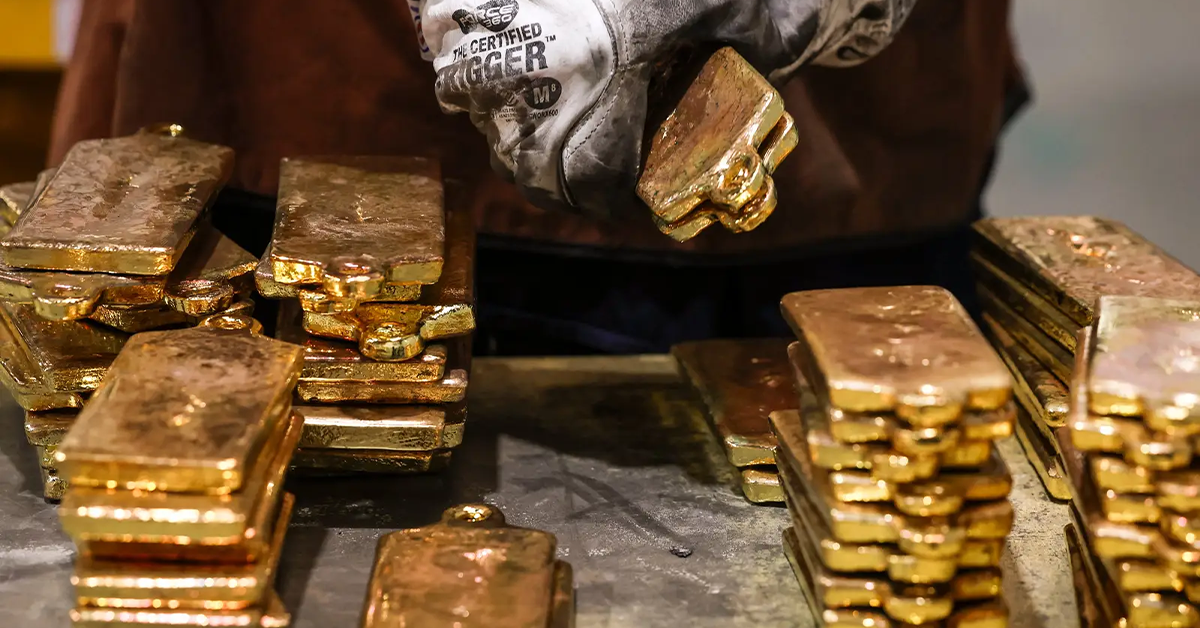
Egypt has a long-established precious metals industry supported by a strong domestic demand for gold, experienced jewelry manufacturers, bullion traders, refiners, wholesalers, and specialized testing and hallmarking institutions. For buyers looking to source 23 Karat (97.3% purity) gold from Egypt, the country offers access to an established market where gold products can be sourced for investment, jewelry manufacturing, wholesale distribution, and international trade.
Egypt’s gold market has also benefited from increasing investment in professional testing and quality-control infrastructure. In 2025, the Egyptian Accreditation Council announced accreditation of an X-ray laboratory operated by the Assay and Weights Authority for gold testing, with internationally recognized accreditation through the International Laboratory Accreditation Cooperation framework. In June 2026, Egypt’s Ministry of Supply and Internal Trade also announced the renewal of ISO/IEC 17025:2017 accreditation for the authority’s central calibration and testing laboratories, including testing of gold purity using ED-XRF technology.
For an international buyer, however, finding gold in Egypt is only one part of the purchasing process. A successful transaction also requires careful supplier verification, independent confirmation of purity and weight, appropriate commercial documentation, secure payment arrangements, and compliance with the laws governing the export from Egypt and import into the destination country.
Why Buy Gold From Egypt?
Egypt occupies an important position within the regional precious metals market. Gold has substantial cultural, commercial, and investment importance in the country, creating demand for a broad range of gold products and supporting an extensive network of businesses involved in the sector.
The country’s gold ecosystem includes manufacturers, retailers, wholesalers, bullion businesses, refiners, testing facilities, logistics providers, and other service providers. This gives commercial buyers the opportunity to evaluate different suppliers and purchasing arrangements rather than depending on a single source.
Egypt’s geographic position between Africa, the Middle East, Europe, and Asia can also make it commercially relevant for international buyers considering regional sourcing opportunities. Nevertheless, the attractiveness of a transaction should always be assessed based on the specific supplier, product, destination, applicable regulations, and total landed cost rather than location alone.
Understanding 23 Karat (97.3%) Gold
What Does 23 Karat Gold Mean?
23 Karat gold refers to gold containing approximately 97.3% pure gold, with the remaining portion consisting of other metals used to modify the material’s physical characteristics. Because gold purity is commonly expressed using both karat and fineness systems, buyers should ensure that the precise purity specification is written clearly into the purchase agreement and supporting assay documentation.
A specification of 97.3% purity is particularly important in a commercial transaction because the value of a shipment depends heavily on its actual fine-gold content. Buyers should therefore avoid relying solely on verbal descriptions such as “23K gold” and instead request documentary evidence confirming the agreed fineness.
How 23 Karat Gold Compares With Other Purities
The principal difference between 23K, 24K, 22K, and lower-purity gold is the proportion of pure gold contained in the material. Higher-purity gold generally contains a greater proportion of fine gold, while lower-purity products contain greater amounts of alloying metals.
The appropriate purity depends on the intended application. Jewelry manufacturers may select different purities according to durability and design requirements, while bullion and investment buyers may prioritize high fineness and ease of valuation.
How To Find Gold Suppliers In Egypt
Research The Supplier Before Negotiating
A serious gold transaction should begin with supplier due diligence rather than price negotiation. Buyers should establish who the supplier is, what type of business they operate, how long they have been trading, what products they supply, and whether they are properly authorized to conduct the proposed transaction.
A professional supplier should be able to provide verifiable business information and explain the origin, specifications, availability, and documentation associated with the gold being offered.
Verify Business Credentials
Before transferring funds, buyers should independently verify the supplier’s legal identity and business credentials. The exact documentation required will depend on the nature of the transaction, the supplier’s role, and whether the transaction involves domestic sale or export.
For international purchases, buyers should pay particular attention to whether the proposed supplier is legally positioned to undertake the export and whether the shipment can be accompanied by the documentation required by the relevant Egyptian authorities and the destination country.
Be Careful With Online Offers
Online gold offers should be treated with the same level of scrutiny as physical transactions. Attractive photographs, certificates, company logos, and impressive websites do not by themselves establish the authenticity of a supplier or the availability of the gold.
A buyer should independently verify contact information, business registration, physical operations, testing arrangements, banking details, and contractual documentation before making a substantial financial commitment.
How To Verify 23 Karat Gold In Egypt
Request An Assay Report
The most important question is not simply whether a supplier describes gold as 23K, but whether the actual material has been independently tested.
An assay report provides analytical evidence regarding the composition and purity of the material. Buyers should ensure that the report corresponds to the specific lot being purchased and that the testing organization is appropriately qualified for the required analysis.
Egypt has continued developing its technical infrastructure for precious-metal testing. The Assay and Weights Authority’s central laboratories have renewed ISO/IEC 17025:2017 accreditation, while an X-ray laboratory for gold testing has also received accreditation through Egypt’s national accreditation framework.
Verify The Gold Hallmark
Where applicable, buyers should examine the official hallmark and other identifying marks associated with gold products. Hallmarks are designed to communicate information about precious-metal purity and, depending on the jurisdiction, the responsible assaying or manufacturing entity.
Egyptian authorities have emphasized the importance of official hallmarking in the domestic gold market. In December 2025, Egypt’s government stated that gold jewelry and bullion products legally circulating in the Egyptian market are subject to official hallmarking requirements under the applicable legal framework.
The hallmark should nevertheless be treated as one element of a broader verification process rather than a substitute for appropriate commercial due diligence and independent testing.
Confirm The Weight
Purity alone does not determine the value of a gold shipment. The buyer must also establish the exact gross weight, net gold weight where applicable, and resulting fine-gold content.
For larger transactions, weighing should be conducted using properly calibrated equipment, with the results documented and reconciled against the commercial invoice and assay documentation.
What Determines The Price Of Gold In Egypt?
International Gold Prices
Gold is traded in a global market, meaning prices in Egypt are influenced by international bullion prices. Global economic conditions, interest rates, inflation expectations, geopolitical developments, investment demand, and central-bank activity can all influence the underlying market price.
Consequently, a supplier’s quotation should be evaluated against an appropriate market reference rather than considered in isolation.
Exchange Rates
For international buyers, currency exchange rates are another important consideration. A buyer purchasing gold in a local currency while paying from another country may be exposed to exchange-rate movements between the quotation date, payment date, and settlement date.
This is particularly relevant for larger transactions where relatively small currency movements can materially change the total acquisition cost.
Supplier Premiums And Other Charges
The final price may include more than the underlying value of the gold. Depending on the transaction, the quotation may incorporate refining charges, fabrication costs, dealer margins, testing fees, secure transportation, insurance, export-related costs, banking charges, and other expenses.
A professional quotation should therefore make the pricing methodology sufficiently clear for the buyer to understand what is included and what is payable separately.
Documents To Request When Buying Gold From Egypt
Commercial Invoice
The commercial invoice should clearly identify the parties, describe the gold, state the quantity and purity, specify the price, and establish the agreed commercial terms.
For international transactions, the invoice becomes an important document for customs, accounting, banking, and trade compliance purposes.
Certificate Of Purity Or Assay Report
The purity documentation should correspond to the actual gold being purchased. Ideally, the buyer should be able to connect the assay report to the specific lot, bar, batch, or shipment through appropriate identification.
This is particularly important when purchasing substantial quantities.
Packing And Shipping Documentation
International shipments require appropriate logistics documentation. Depending on the transaction structure and destination, this may include packing information, transport documentation, insurance documentation, customs declarations, certificates, and other supporting records.
The exact requirements should be established before shipment rather than after the cargo has already been dispatched.
Exporting Gold From Egypt
Understand Egyptian Export Requirements
Buying gold in Egypt and exporting gold from Egypt are not necessarily the same process. An international buyer must determine whether the proposed supplier is authorized and equipped to export the specific gold product and whether all required approvals and customs procedures can be completed.
Egypt’s General Organization for Export and Import Control maintains an official database of laws, decisions, and regulations governing import and export procedures. Its published material includes current 2026 regulatory decisions, making official verification particularly important when planning a transaction.
Check Customs Requirements Before Shipment
Customs requirements can change according to the product classification, transaction structure, origin, destination, and applicable legislation. Egypt’s Nafeza platform publishes customs-related notices covering import and export procedures, while the Egyptian Customs Authority maintains official publications and legislative information.
International buyers should therefore confirm the current requirements with the relevant authorities, customs professionals, and logistics providers before finalizing the transaction.
Buying Gold From Egypt For International Delivery
Work With Experienced Precious-Metal Logistics Providers
Gold requires a substantially higher level of security than ordinary commercial cargo. International shipments should be handled through logistics providers with appropriate experience in precious metals, secure transportation, documentation, customs procedures, and insurance.
The shipping arrangement should be agreed upon before payment, including responsibility for transportation, insurance, customs formalities, and delivery.
Arrange Appropriate Insurance
Insurance is particularly important for high-value gold shipments because the financial exposure can be substantial even when the physical package is relatively small.
The buyer should understand the insured value, coverage period, exclusions, claims procedure, and party responsible for arranging the policy.
Safe Payment Practices When Buying Gold From Egypt
Verify Banking Details Independently
Fraud involving altered invoices and substituted bank-account information is a significant commercial risk in high-value transactions. Payment instructions should therefore be independently confirmed using previously verified supplier contact information.
A last-minute request to send funds to a different account should never be accepted without additional verification.
Use A Written Purchase Agreement
A comprehensive sales and purchase agreement should establish the exact specifications of the gold, quantity, purity, price formula, assay procedure, payment structure, delivery terms, shipping responsibilities, insurance, documentation, and dispute-resolution provisions.
Clear contractual terms are particularly important when buyer and seller are located in different countries.
Common Mistakes To Avoid When Buying Gold From Egypt
Choosing The Cheapest Supplier
The lowest quotation is not necessarily the best transaction. An unusually low price can be accompanied by hidden fees, inadequate documentation, poor-quality material, unclear delivery arrangements, or significant counterparty risk.
The correct approach is to evaluate the total transaction cost and risk, not simply the quoted price per gram or kilogram.
Paying Before Verification
Buyers should avoid making substantial irreversible payments before completing reasonable supplier and product verification.
The appropriate payment structure depends on the transaction and the parties involved, but the commercial process should provide sufficient protection against non-delivery or material misrepresentation.
Accepting A Certificate Without Verifying It
A document described as an assay certificate is not automatically proof of authenticity. Buyers should verify the issuing organization, report number, date, sample identification, testing method, and relationship between the report and the actual shipment.
Ignoring Import Regulations In The Destination Country
Even if a shipment can legally leave Egypt, it must still satisfy the laws of the destination country. Import licensing, customs declarations, taxes, anti-money-laundering requirements, precious-metal regulations, and documentation requirements may apply.
Buyers should establish these requirements before purchasing the gold.
Why Independent Gold Testing Matters
Independent testing creates a measurable basis for determining whether the material supplied matches the contractual specification. This is especially important for international transactions where the buyer may not have direct control over the production, refining, or packaging process.
Modern non-destructive testing technologies such as X-ray fluorescence can provide rapid analysis of precious-metal composition. Egypt’s accredited testing infrastructure includes ED-XRF analysis for determining and confirming gold purity.
For higher-value transactions, buyers should discuss the appropriate testing methodology with an accredited laboratory or qualified assayer before shipment.
Benefits Of Sourcing 23 Karat Gold From Egypt
Access To An Established Gold Industry
Egypt has a substantial domestic gold industry supported by established businesses and technical institutions. This provides buyers with access to a developed ecosystem rather than an isolated marketplace.
Professional Testing Infrastructure
The development and accreditation of gold-testing laboratories provides additional mechanisms for verifying purity and improving confidence in gold transactions.
Regional Commercial Connectivity
Egypt’s location provides commercial links between Africa, the Middle East, Europe, and other international markets. For buyers with appropriate import and export arrangements, this can make the country a strategically relevant sourcing market.
Is Egypt Suitable For International Gold Buyers?
Egypt can be a suitable sourcing market for international gold buyers, but suitability depends on the specific transaction rather than the country alone. A buyer should evaluate the supplier, purity, price, documentation, export arrangements, destination-country requirements, logistics, insurance, and total landed cost before committing to a purchase.
The presence of an established market and professional testing infrastructure can support a transaction, but it does not eliminate the need for independent due diligence.
Frequently Asked Questions About Buying Gold From Egypt
- Can I Buy 23 Karat Gold From Egypt? Yes, gold products of different purities are available within Egypt’s precious-metals market. However, buyers seeking specifically 23 Karat or approximately 97.3% purity should have the required fineness clearly stated in the purchase agreement and independently verified through appropriate testing.
- What Is The Difference Between 23K And 24K Gold? 23K gold contains approximately 97.3% pure gold, while 24K gold represents a substantially higher level of purity. The exact fineness should always be confirmed through the supplier’s specification and an appropriate assay rather than inferred solely from a product description.
- How Do I Know If Egyptian Gold Is Genuine? The safest approach is to combine several verification methods, including supplier due diligence, official or recognized hallmarking where applicable, accurate weighing, and independent assay testing. Egyptian authorities have emphasized official hallmarking as an important mechanism for verifying legally marketed gold products.
- Can Gold Bought In Egypt Be Exported? Exportability depends on the product, transaction, exporter, applicable Egyptian regulations, customs requirements, and destination-country rules. Buyers should confirm the current requirements before concluding the purchase rather than assuming that any gold purchased domestically can automatically be exported.
- What Should I Check Before Paying For Gold? Before making a substantial payment, verify the supplier’s identity and credentials, confirm the gold specification, review the assay documentation, establish the exact weight, agree on the price and payment terms, confirm export and import requirements, and ensure that the contract clearly defines each party’s obligations.
- Is An Assay Report Necessary For A Large Gold Purchase? For a significant transaction, independent assay verification is strongly advisable. It provides objective evidence of purity and can help establish whether the material corresponds to the contractual specification.
- Can A Foreign Buyer Purchase Gold From Egypt? Foreign buyers may be able to purchase gold from Egyptian suppliers, subject to the applicable laws, commercial structure, export requirements, and regulations in both countries. International buyers should use properly documented transactions and obtain professional advice where the transaction is substantial or legally complex.
Final Considerations Before Buying Gold From Egypt
Buying 23 Karat (97.3%) gold from Egypt can provide international buyers with access to an established precious-metals market supported by experienced industry participants and increasingly sophisticated testing infrastructure. Egypt’s official institutions continue to maintain regulatory, customs, hallmarking, and laboratory systems relevant to the precious-metals sector.
Nevertheless, the quality of a gold transaction ultimately depends on the specific supplier and the controls applied to the transaction. Buyers should never rely solely on a supplier’s reputation, photographs, certificates, or quoted price. Supplier verification, independent assay testing, accurate weighing, proper contracts, secure payment arrangements, appropriate insurance, and compliance with export and import requirements should form the foundation of any serious purchase.
For international buyers, the objective should not simply be to find gold in Egypt, but to establish a transparent, verifiable, and properly documented transaction in which the purity, quantity, price, origin, ownership, shipping arrangements, and regulatory obligations can all be independently established. That approach provides the strongest foundation for a secure and commercially successful gold purchase.
Leave a Reply